

How To Repair Bathroom Drainpipe
Notice and Repair Hidden Plumbing Leaks
Updated: Jun. eleven, 2022
Find and fix minor drips before they cause major damage
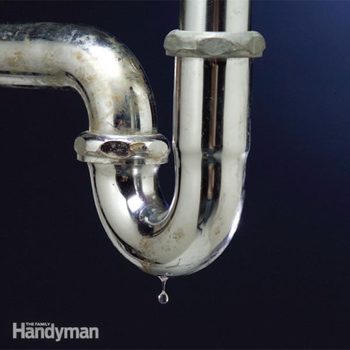
We testify simple ways to find and cease common water leaks earlier they cause rot and other expensive impairment. You'll find most of them around bathtubs and showers, drains, sinks and toilets.
You might also like: TBD
- Time
- Complexity
- Cost
- An hour or less
- Beginner
- Less than $20
Tub and Shower: Splash Leaks

Test a shower door
Splash water all effectually a shower door. If h2o seeps out from behind the frame, caulk the frame on the inside. Run a new bead forth the floor/tub joint.
Splash leaks are simply water escaping past a shower pall or a shower door. Plumbers tell us it's the most common type of bathroom leak. Although it may audio minor, this leak causes major impairment when water seeps into the subfloor where floor meets the tub or shower. Before long the vinyl flooring or tiles brainstorm to loosen. Even worse, the plywood subfloor delaminates and rots, requiring a huge, expensive tearout and replacement project.
Signs of trouble:
- Curling vinyl flooring or loose tiles side by side to the tub.
- Peeling paint or flaking, chalky-looking wood end near the shower.
- Water stains on the ceiling or joists beneath.
- Mold spots on the wall or floor near the tub or shower.
- If you use a curtain, look for continuing water on the flooring after you shower.
How to find the source of a bathtub bleed leaking:
- If you have a shower door, splash h2o all around the door and frame. Leaks around the frame may take 5 minutes or longer to show upwards.
- If the door has rubber gaskets or a rubber door sweep, cheque them for gaps.
- Likewise check for whatever gaps in the caulk where the shower or tub meets the flooring.
How to set a leaking tub drain:
- Be certain to overlap sliding doors correctly when you shut them. The inner door should be closest to the faucet.
- If you have a shower pall rather than a door, make sure y'all close it completely when you shower, or add a splash guard.
- Seal a leaking frame by running a small bead of tub and caulk around the inside of the frame. Strength the caulk into any gaps between the frame and the shower surround. Quickly wipe abroad all the excess caulk. When the caulk dries, test for leaks once more.
- Supersede any worn gaskets or door sweeps. Bring the old i to a home middle or plumbing supply store and expect for a matching replacement (exist sure to get the correct size to fit).
- If the old caulk along the floor shows gaps, scrape it out and run a new bead.
Homeowner story:
"I noticed the floor tile along the tub was coming loose. I pushed on it and it crunched downward into the underlayment, which was totally rotten. We ended upwards replacing all of the tile and function of the subfloor."
Effigy A: Tub and Shower Leaks
The most damaging tub and shower leaks occur when water splashes out of the enclosure. Tile and drain leaks tin can also cause major damage.
Tub and shower: Drain leaks
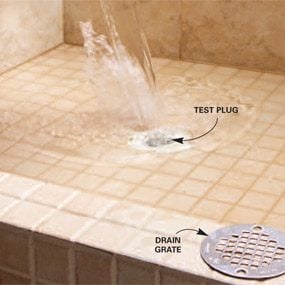
Photo 1: Examination a drain
Plug the bleed with a examination plug and add h2o. After an hour, check to meet if the water level has dropped.
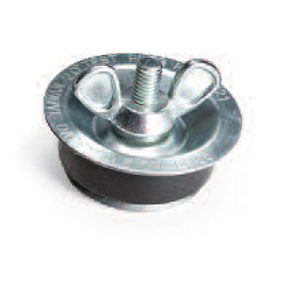
Photo 1A: Close-up of exam plug
Measure the drain diameter and buy a examination plug to fit.
Drain leaks allow water to sneak around the outside of the drain where it'southward connected to the tub or shower. This is specially common with plastic or fiberglass tubs and shower pans, since these materials flex slightly when you lot stand on them, often breaking the seal effectually the drain. These leaks can stain or destroy the ceiling below or rot floor joists. In the case of a tub prepare on a concrete slab, the leak will ruin flooring in the bath or adjoining rooms.
Signs of trouble bathtub drain leaking:
- H2o stains on the ceiling or joists beneath.
- Loose floor near the tub or damp floors in bordering rooms (if the tub is on a physical slab).
How to find the source of a leaking tub drain:
- If you can run into the underside of the drain through an access panel or open up ceiling, partially fill up the tub and so release the water. In a shower, plug the bleed with a rag and then release the water. Check the drains and traps for leaks from below through the admission panel.
- If you don't have admission to the underside of the drain, plug the drain and add enough h2o to course a small puddle around the drain (photo). Mark the edge of the puddle by setting a canteen of shampoo side by side to it. Then wait an hr. If the pool shrinks, the drain is leaking. Don't rely on your tub stopper for this test; it may leak. Remove the stopper and insert a one-1/ii-in. test plug (notice them at home centers). Remove the grate and utilize a two-in. plug for a shower.
How to fix a bathtub drain leaking:
- To repair a tub drain, unscrew the drain flange from above. Then make clean the flange and utilize silicone caulk. Likewise remove the condom gasket that's under the tub's drain hole and take information technology to a home heart to find a matching gasket (be sure to get the correct size to fit). Skid the new gasket into identify and screw in the drain flange.
- If y'all accept admission to a shower drain from below, tighten the ring nut that locks the bleed to the shower pan. If that doesn't work, replace the drain associates. If yous don't accept access beneath the drain, cut a pigsty in the ceiling below or supervene upon the drain assembly with a WingTite drain.
Tub and shower: Tile leaks
Tile leaks occur when water seeps through deteriorating grout or caulk and gets into the wall behind the tile (Figure A). Depending on the materials used to fix the tile, this can lead to tile falling off the wall, severe rotting of the wall framing, and damage to the subfloor, joists or ceiling below.
Signs of trouble:
- Loose tiles.
- Persistent mold.
- If the shower is against an exterior wall, you lot may find an area of peeling paint outside.
- Stains on the ceiling under the shower.
How to detect the source:
- Examine the grout and caulk joints for gaps. Yous almost always find mold here.
- If you take loose tile behind the tub spout or faucet, open the access panel behind the faucet and look for dampness or stains.
How to set information technology:
- Remove the old grout, caulk and loose tiles.
- If the surface backside the tile is however solid, you can reattach tiles, regrout and recaulk using tub and tile caulk.
- If more than a few tiles are loose or if the wall is spongy, you'll have to install new capitalist board and tile, or a fiberglass environment.
Toilet flange leaks
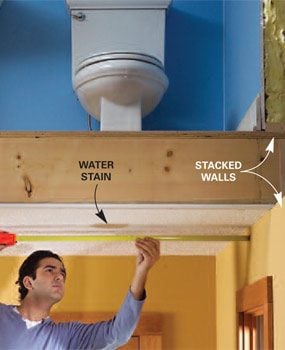
Photo one: Locate the source
Take measurements from stacked walls to discover the source of a ceiling stain. In most cases, the stain occurs close to the source.
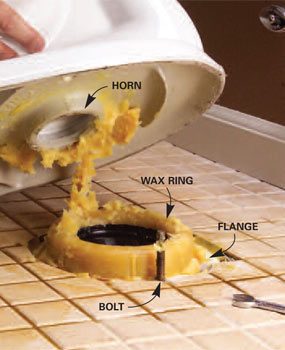
Photo two: Bank check for flange leaks
Unscrew the toilet bolt nuts and remove the toilet. Scrape away the wax and await for leaks. As well check for cracks around the toilet'due south horn.
These leaks occur where the toilet meets the waste pipe below. They allow water to seep out at every affluent, which will wreck flooring, rot the subfloor and joists, and damage the ceiling below (Photo 1).
Signs of trouble:
- Water seeping out around the base of the toilet.
- Loose or damaged flooring.
- Stains on the ceiling beneath.
- A toilet that rocks slightly when you push against it. This movement will somewhen break the wax seal between the toilet and the closet flange.
How to find the source:
If you have ceiling stains, measure from stacked walls (right photo) earlier you become through the hassle of removing the toilet. If the stain is near the toilet, a leaking flange is the most likely source. Remove the toilet (Photo two) and look for these leak sources:
- The flange is level with or below the surrounding floor surface.
- Cracks in the flange.
- Bolts or the slots they fit into are cleaved.
- The flange is loose, not screwed solidly to the subfloor.
How to fix it:
- If you don't find any of the problems listed above, reinstall the toilet with a new wax band.
- If the flange is too low, install a plastic flange riser over the existing flange.
- If the flange or bolt slots are cleaved, install a metal repair flange.
- If the toilet rocks considering the floor is uneven, slip toilet shims under the toilet when you reinstall it.
Homeowner story:
"I had noticed the toilet rocking slightly for a few years, just I kept putting off the repair. Then i day the ceiling nether the toilet brutal in. Information technology turned out that the wax ring had been leaking for years. The subfloor around the toilet was rotted, and the more it rotted, the more the toilet rocked and the more water leaked out with every flush."
Figure B: Toilet Leaks
Toilet leaks can come up from the h2o supply or tank, but the most damaging leaks occur at the flange and wax ring.
Sinks: Sink rim leaks
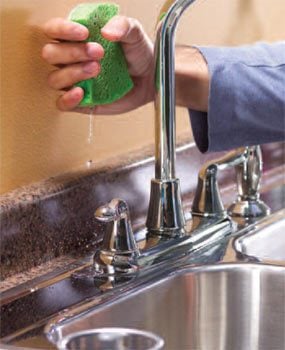
Test for rim leaks
Distill h2o around the sink rim and faucet base with a sponge. And then expect for leaks below using a flashlight.
Sink rim leaks permit h2o to seep nether the rim or the base of operations of the faucet. They volition gradually destroy your cabinets and countertops in kitchens and bathrooms.
Signs of trouble:
- Puddles, dampness or water stains within the cabinet.
- Loose plastic laminate near sink.
- A loose faucet base.
- Deteriorating caulk around sink.
How to discover the source:
- If y'all have a plastic laminate countertop, examine the underside of the countertop using a flashlight. Await for swollen particleboard or other signs of water damage.
- Distill water around the sink rim and look for leaks (photo).
How to fix it:
- Tighten the faucet base by turning the mounting basics underneath it.
- If the sink rim is caulked, scrape abroad the quondam caulk and recaulk.
- Tighten the clips under the sink rim that clamp the sink to the countertop.
Homeowner story:
"The caulk around my cast iron sink was in bad shape for years, but I didn't worry about it until the plastic laminate in forepart of the sink began to loosen. I stuck my head under the sink and saw that the particleboard nether the sink rim was blackness and bloated. When I poked at the rotten particleboard, it crumbled like charred wood. I had to replace all my countertops at a cost of $800. But I'm glad the old countertop gave me a warning sign—with a few more months of rot, that 100-lb. sink could accept fallen into the cabinet below."
Figure C: Sink Leaks
Sink leaks can occur at any plumbing joint. Just the most common leaks happen at the sink rim, shutoff valves, supply line connections and slip joints in the waste product lines.
Nether Sink Plumping: Supply leaks
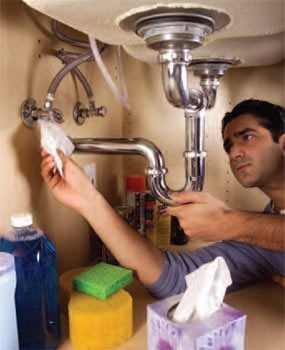
Check for supply leaks
Don't rely on your sense of touch to observe tiny under sink plumbing leaks. Wipe each connection with a dry tissue. And then look for a wet spot on the tissue.
Supply leaks under the kitchen sink or bathroom vanity can go unnoticed for a long time since they're usually at the back of the cabinet. Water tin run downward the pipes into the floor or subfloor, rotting the sink base, the floor and the framing.
Signs of under sink plumbing trouble:
- Puddles, dampness or water stains under sink plumbing and inside the chiffonier.
- Stains on the ceiling below.
How to observe the source:
- Dab shutoffs and connections with a dry tissue or newspaper towel and look for wet spots (photo).
- Run the dishwasher and check for leaks under information technology.
How to fix information technology:
- If the valve stalk on a shutoff valve drips, tighten the packing nut. If the leak doesn't stop, replace the valve.
- For other leaks at the shutoff valve or at the faucet, endeavour tightening the compression nut first. If that doesn't stop the leak, disassemble the fitting, glaze the ferrule or gasket with Teflon joint compound (available at home centers and hardware stores) and reassemble the connection.
Sinks: Drain leaks
Bleed leaks in kitchens and bathrooms usually occur at the bleed or at the sideslip joints in the drainpipe. Hidden behind boxes and bottles, these leaks can damage flooring, cabinets and fifty-fifty ceilings below before you observe them.
Signs of trouble:
- Puddles, water stains or a dank odor in the cabinet.
- Loose or damaged flooring in front of the sink.
How to find the source:
- Fill the sink bowls, then as they drain check all joints from the sink to the wall with a dry tissue (come across photo above).
- Run and drain the dishwasher and check the waste hose connection.
How to fix it:
- For a slip articulation leak, first tighten the slip nut. If that doesn't work, detach the joint, glaze the washer with Teflon articulation compound and reassemble.
- For a leak from the handbasket strainer, tighten the ring nut nether the sink. If the leak continues, disconnect and remove the handbasket strainer. Reassemble information technology using plumber'southward putty as a sealant under the handbasket'due south rim.
2 Slow Leaks That Indicate Catastrophe
If you notice puddles near your water heater, check the pressure relief valve and the drain valve. If either is dripping, replace the valve. If not, the tank is leaking and you need a new water heater. Don't delay. Tank leaks often start deadening and so suddenly burst days or weeks later, causing a major household flood. The aforementioned goes for washing machine supply hoses. If yous find a tiny leak in the hose itself or at the crimped metal fittings at the ends, supervene upon the hose. Otherwise the hose may somewhen burst, releasing a continuous menses of water.
Test for Hidden Leaks
The vast bulk of leaks occur at or nearly plumbing fixtures like tubs, sinks and toilets. Merely if y'all suspect a leak in the water supply system, at that place's a simple way to check it— even if the pipes are subconscious inside walls. First, turn off all your faucets. If you have drippy faucets or a toilet that runs between flushes, shut the shutoff valves. Then go to your h2o meter and check the position of the "1-cubic-foot" dial. Bank check the punch again ii hours later. If the dial has moved, you accept a leak in the water supply.
Required Tools for this Project
Have the necessary tools for this DIY project lined up before you lot outset—you'll save fourth dimension and frustration.
Required Materials for this Project
Avert concluding-minute shopping trips by having all your materials ready ahead of time. Hither'south a list.
Originally Published: Nov 25, 2022

Source: https://www.familyhandyman.com/project/find-and-repair-hidden-plumbing-leaks/
Posted by: jonesalownd.blogspot.com
0 Response to "How To Repair Bathroom Drainpipe"
Post a Comment